Claude Sonnet 4’s 1M Token Context Could Change How You Write, IF You Use It Differently

Every novelist and fanfic writer has hit the same wall with AI: It forget
Not right away but after a few chapters, important details slip. A character’s backstory changes. Worldbuilding rules vanish. Tone drifts.
Now, with Claude Sonnet 4’s massive 1 million token context window, that wall is gone. But here’s the catch: if you use it the same way you’ve been using smaller context windows, you’ll barely scratch the surface.
This isn’t just “more memory.” This is an entirely new way to write.
The Old Way vs. The New Way
Old way:
Write a bit → paste into AI → give it a quick summary of “the story so far” → pray it remembers the rest.
New way with 1M tokens:
Give Claude everything from the start:
- Your entire manuscript so far (yes, all of it).
- All your notes, outlines, and research.
- Unused drafts, deleted scenes, alternate dialogue options.
- Reader or beta feedback.
Then keep it there so every word you generate happens inside a full creative memory of your book.
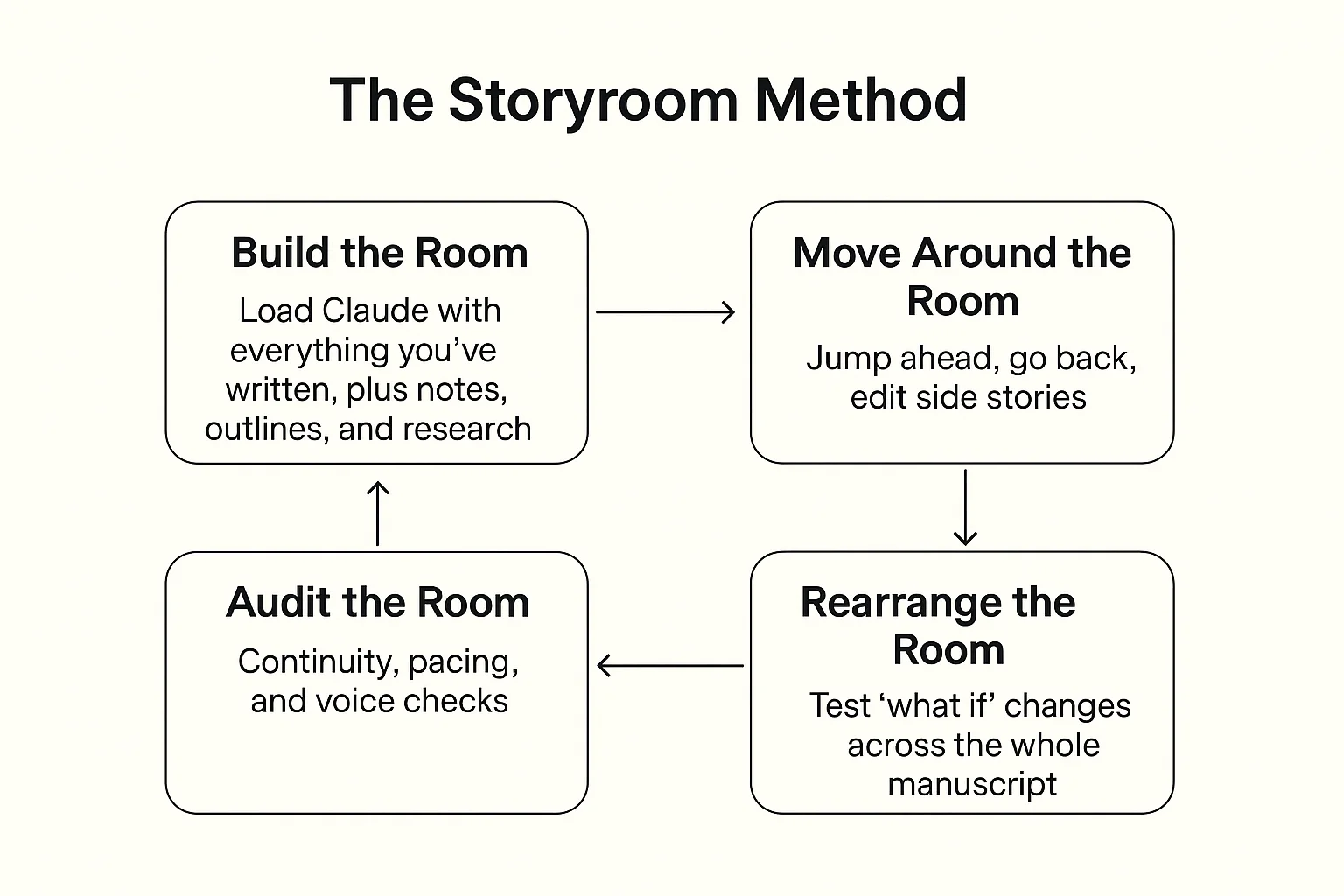
A New Approach: “The Storyroom Method”
Here’s a workflow that only works now something different from just feeding in a big chunk of text. I call it the Storyroom Method.
1) Build the Room
Before you even write the next chapter, load Claude with everything you’ve written, plus worldbuilding documents, character bios, and even early sketches of scenes you’re thinking of adding. This is like decorating a physical room where every object (plot point, location, character) is already there for the AI to look at.
2) Move Around the Room
Instead of going chapter-by-chapter, “walk” around the story. You might:
- Jump ahead and write the emotional climax.
- Write a side character’s origin story.
- Fix a pacing issue in an early chapter while you’re deep in the middle of the book.
Because Claude sees the entire room, every change you make connects instantly with everything else.
3) Rearrange the Room
Ask Claude to test “what if” changes across the whole manuscript in real time:
- “What if Character A makes their confession 50 pages earlier?”
- “What if this subplot runs parallel instead of intersecting in Chapter 12?”
You’re not rewriting blindly you’re shifting furniture in a room where you can see the full layout.
4) Audit the Room
Before publishing, use the context window to run “full sweeps”:
- Continuity check across every scene.
- Emotional pacing chart from first to last chapter.
- Voice and tone consistency.
This is the kind of quality control that was impossible before without re-reading your entire book multiple times.
Why This Is Different
Most writers will hear “1M tokens” and think: “Cool, now I can just dump my story in and have the AI help.”
But the Storyroom Method treats your novel as a living space the AI can explore not a flat text file. You’re no longer locked into linear writing. You can make sweeping creative changes while keeping every thread intact.
It’s like having a writing partner who remembers your story better than you do.
--- **Want to put this method into action?** You can try it right now with **[Novel Mage](https://novelmage.com)** our AI-assisted writing platform built for novelists and fanfic creators. Sign up free and see how it can transform the way you write.